
Ankle Sprain Rehab
Full ankle recovery and prevention of re-sprains
4-week
Programme length
£60
Assessment
Not needed
GP referral
Level 5 therapists
Written by
OVERVIEW
4-week programme from acute management through to proprioception training and return to sport. Covers lateral, medial and high ankle sprains.
Written by our sports therapists at RE:UP · Reviewed May 2026
WHAT IS IT
What is Ankle?
An ankle sprain is a stretch or tear of the ligaments surrounding the ankle joint — most commonly the anterior talofibular ligament (ATFL) on the outside. Sprains are graded 1 to 3 by severity and are one of the most common sporting injuries across all disciplines. Despite being frequently dismissed as minor, poorly rehabilitated ankle sprains significantly increase the risk of re-injury and chronic ankle instability, which is why a structured rehab programme matters as much for grade 1 sprains as for grade 3.
COMMON CAUSES
What causes Ankle problems?
- 01Inversion injury — the ankle rolls outward, straining the lateral ligaments
- 02Eversion injury (less common) — the ankle rolls inward
- 03Landing from height on an uneven surface
- 04Changing direction rapidly in sport
- 05Previous ankle sprain — the strongest predictor of re-injury
- 06Poor balance and proprioception after previous injury
- 07Weak peroneals and hip stabilisers leaving the ankle unprotected
IMPORTANT
When to seek urgent help
Seek medical attention before starting this guide if you experience any of the following. Call your GP, NHS 111, or go to A&E.
- !Inability to put any weight through the foot after injury
- !Bony tenderness over the tip of either ankle bone or the foot
- !Significant immediate swelling and bruising
- !Suspected fracture based on mechanism and tenderness location
SUITABLE FOR
Is this guide right for you?
- Lateral ankle sprain
- High ankle sprain
- Recurrent ankle instability
- Return to sport after sprain
WHAT'S INCLUDED
What this guide covers
- 4-week progressive exercise programme (PDF)
- POLICE protocol for acute phase
- Balance & proprioception training
- Return-to-sport checklist
- Booking link for 1:1 assessment at RE:UP
TRAINING
Can you train during recovery?
Yes. Upper body and non-weight-bearing lower body work can continue almost immediately. Progressive weight bearing and then sport-specific movement are reintroduced as the ankle stabilises. Most people can return to modified training within 2–4 weeks for a mild sprain.
TIMELINE
Recovery timeframe
Grade 1 (minor ligament stretch) — 1–3 weeks. Grade 2 (partial tear) — 3–6 weeks. Grade 3 (complete tear) — 6–12 weeks, sometimes longer. The rehabilitation phase — particularly balance training — should continue beyond the point of being "pain-free" to reduce re-injury risk.
PROFESSIONAL ASSESSMENT
How RE:UP can help
A sports therapy assessment at RE:UP for ankle sprains grades the injury, assesses ligament integrity, checks for bony tenderness that may indicate fracture, and evaluates balance and proprioception. The rehabilitation programme addresses swelling management, range of motion, strength, and — critically — balance and reactive ankle control, which is most commonly missed in self-managed recovery.
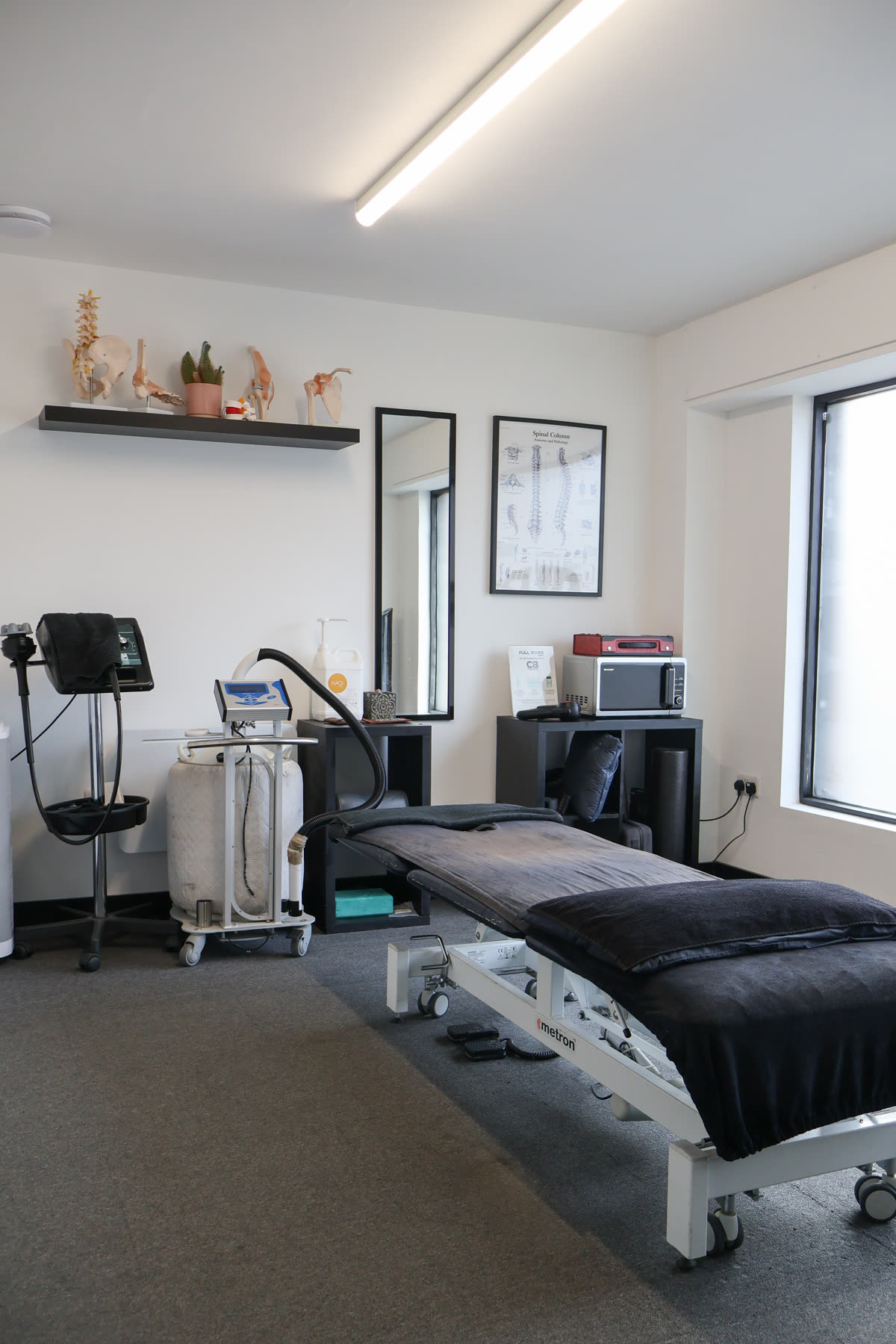
This guide is not a substitute for a hands-on assessment. If it is not settling the way you would expect, book in at our sports injury clinic in Altrincham for a proper diagnosis and a plan built around your injury.
Book an Assessment, £60FAQ
Frequently asked questions
Not always. The Ottawa Ankle Rules are used clinically to decide whether imaging is needed — they look at the ability to bear weight and tenderness over specific bony points. A sports therapist can apply these criteria in assessment. If a fracture is suspected, imaging is recommended before beginning rehabilitation.
Minor sprains (Grade 1) typically resolve in 1–3 weeks. Moderate sprains (Grade 2) take 3–6 weeks. Severe sprains (Grade 3) can take 6–12 weeks. Returning to sport before proprioception and strength are restored significantly increases re-injury risk.
The most common reason is that the first sprain was not fully rehabilitated. Specifically, balance and proprioception — the ankle's ability to react quickly to unstable surfaces — is often not addressed in self-managed recovery. A structured rehabilitation programme specifically includes this.
DISCLAIMER
This guide is general exercise information, not medical advice, and it has not been assessed against your specific injury. Stop any exercise that causes sharp, worsening, or unusual pain. Consult your GP or another qualified healthcare professional before starting if you have an existing medical condition, are pregnant, or are recovering from surgery. RE:UP Altrincham and the Level 5 sports therapists who wrote this guide accept no liability for any injury or loss arising from its use. Following this guide does not create a client relationship with RE:UP Altrincham and is not a substitute for a hands-on assessment.