
ALTRINCHAM · WA14 5EL
Contrast Therapy in Altrincham
RE:UP Altrincham offers contrast therapy sessions combining 8-person Finnish sauna with two cold plunge baths at 4–7°C. 90-minute free-flow sessions from £20 at 20 Huxley Street, Broadheath. Open seven days a week, 7am to 9pm.
£20
Sessions from
8-person
Finnish sauna
2
Cold plunge baths
90 min
Session length
THE QUICK ANSWER
RE:UP is a sports recovery centre at 20 Huxley Street, Broadheath, Altrincham. It has an 8-person Finnish sauna (Finnish dry sauna at 90–110°C) and two cold plunge baths maintained at 4–7°C. Contrast therapy — alternating between the sauna and the cold plunge in rounds — is the primary use of the facility. A 90-minute free-flow session costs from £20 and includes access to everything: the sauna, both cold plunges, Normatec compression and the mobility zone. Open seven days a week. Free parking nearby.
WHAT IT IS
Sauna and ice bath, alternated in rounds
Contrast therapy is the deliberate alternation between heat and cold. You go from the sauna into the cold plunge, then back to the sauna, then back to cold — repeating the cycle 3–4 times in a 90-minute session.
The heat dilates blood vessels and relaxes muscle tissue. The cold narrows them rapidly, redirecting blood to the core. Moving between the two forces repeated cycles of vasoconstriction and vasodilation — a vascular pumping effect used to clear metabolic waste and accelerate recovery after training or competition.
RE:UP sessions are free-flow — there is no fixed protocol or instructor timing you. Most people find a rhythm of 3–4 rounds naturally within 90 minutes. Staff are on hand if you want guidance.
01
Sauna — 10–15 minutes
Finnish dry sauna at 90–110°C. Heat raises core temperature, relaxes muscle tissue and opens blood vessels in preparation for the cold.
02
Cold plunge — 2–3 minutes
Cold water immersion at 4–7°C. Vasoconstriction and the norepinephrine response happen within seconds. Controlled breathing makes the cold manageable even for first-timers.
03
Repeat — 3 to 4 rounds
Return to the sauna, allow blood vessels to reopen, then back to cold. Each round reinforces the vascular pumping effect. Most people complete 3–4 rounds in 90 minutes.
04
Finish on cold
Most protocols end on cold — it leaves the body in a calm, low heart rate state with the norepinephrine response still active. Some prefer finishing on heat for relaxation.
THE FACILITY
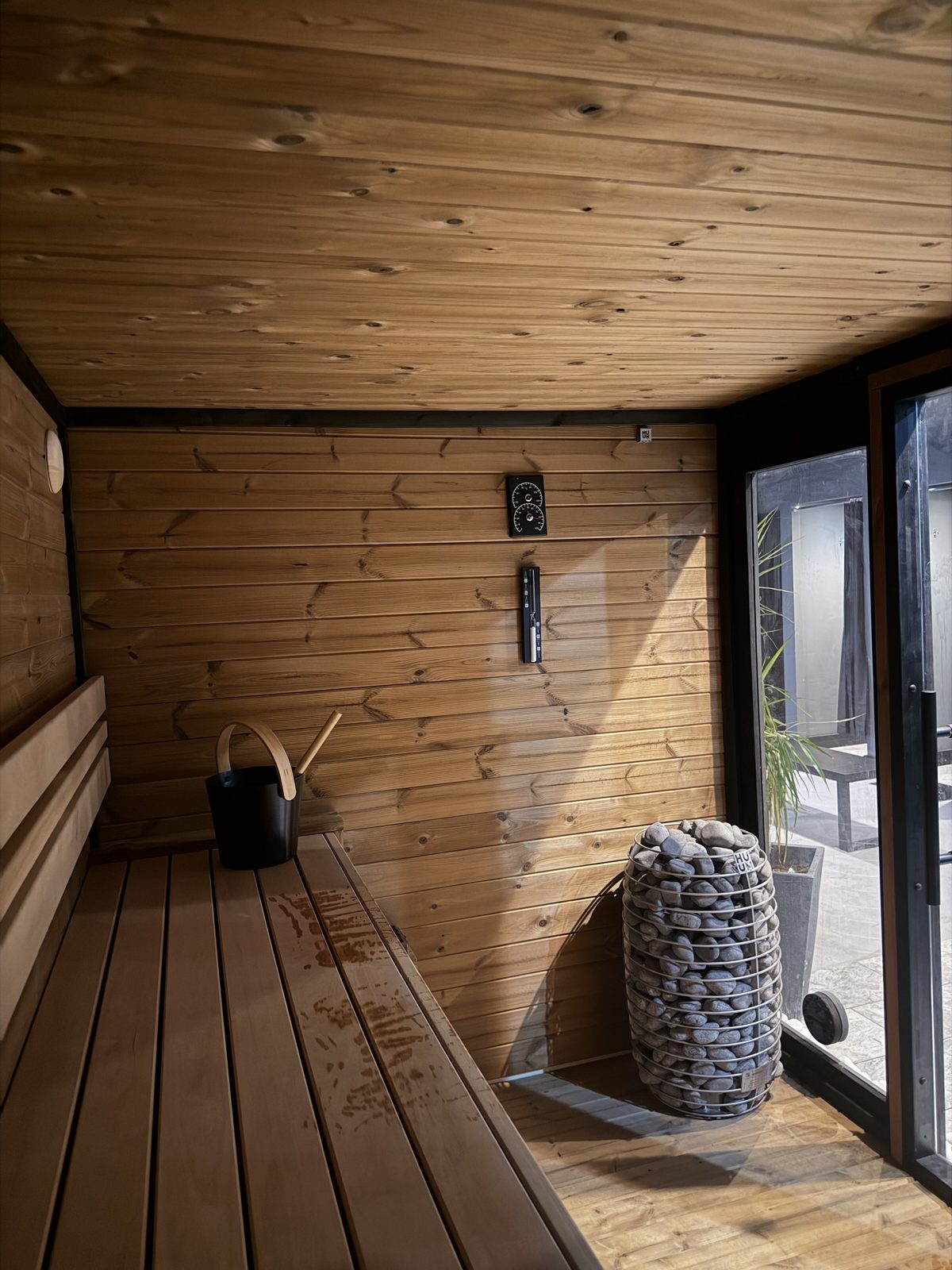
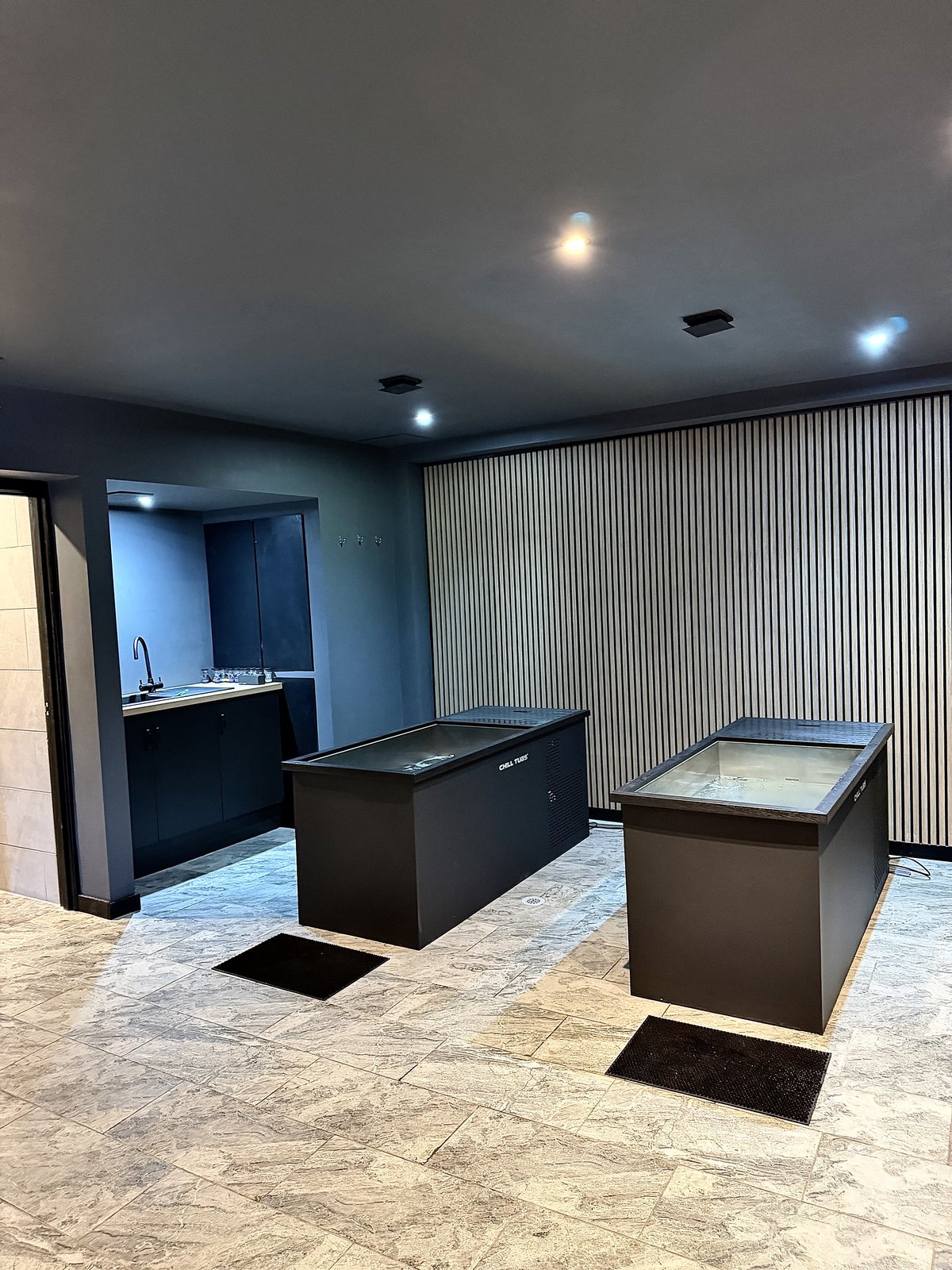
An 8-person Finnish sauna and two cold plunge baths at 20 Huxley Street
Having an 8-person Finnish sauna and two cold plunges means there is never a queue. You always have something to go into when you are ready to switch.
Finnish dry sauna — 90–110°C
Traditional dry heat at 90–110°C. The most commonly used sauna for contrast therapy protocols — the intense heat primes the body quickly for the cold plunge transition.
Cold plunge baths — 4–7°C
Two purpose-built cold plunge units maintained at 4–7°C by a chiller system. Temperature is monitored daily. Deep enough to submerge the whole body to the shoulders — the same standard used in professional sports recovery.
Normatec compression
Pneumatic compression boots for lymphatic drainage and venous return. Included in every session. Many people use them between rounds — they complement the vascular effect of contrast therapy.
THE PHYSIOLOGY
What the body does during contrast therapy
Each temperature transition triggers a distinct response. Here is what happens at each stage — no claims beyond the established physiology.
Vasoconstriction (cold)
On entering the cold plunge, peripheral blood vessels narrow rapidly. Blood is redirected to the core. This happens within seconds of immersion at 4–7°C.
Vasodilation (heat)
On entering the sauna — or on exiting the cold — blood vessels reopen. Oxygenated blood floods back into peripheral tissue, clearing metabolic waste products including lactate.
Norepinephrine release
Cold exposure reliably produces a large norepinephrine surge — the same neurochemical involved in alertness and focus. Most people feel sharp and clear-headed immediately after a cold plunge.
Parasympathetic recovery
After the session, as core temperature normalises, the body enters a pronounced parasympathetic state: heart rate drops, cortisol falls, and sleep quality is commonly reported as improved that night.
There is consistent evidence that contrast water therapy reduces perceived muscle soreness (DOMS) and accelerates subjective recovery in the 24–72 hours after exercise, particularly for endurance and team sport athletes. Read the full evidence guide →
WHO COMES HERE
Who uses contrast therapy at RE:UP
Runners and endurance athletes
The most consistent users. Heavy mileage accumulates systemic fatigue and local muscle damage that contrast therapy clears efficiently. Many marathon and triathlon athletes in Altrincham, Sale and Hale book 2–3 times per week during training blocks.
Team sport players
Used within 24 hours of a match. Rugby, football and cricket players commonly book the morning after a game. The vascular pump clears lactate and reduces DOMS fast enough to allow full training to resume within 48–72 hours.
Gym users and strength athletes
For DOMS management and recovery between sessions. Some concern exists that frequent post-lift cold immersion may blunt hypertrophy signalling — for most recreational gym users training 3–5 times per week, the recovery benefit outweighs any marginal effect.
People using it for wellbeing
No sports background required. The norepinephrine spike from cold exposure followed by the parasympathetic shift produces a reliable mood and sleep effect. Once or twice a week, consistently, is enough.
PRICING & MEMBERSHIP
What contrast therapy costs at RE:UP
A single 90-minute contrast therapy session costs £20. If you visit more than once a month, one of the three membership tiers below works out cheaper per session.
Single Session
£20 per visit
One 90-minute session. The 8-person Finnish sauna, both cold plunge baths, Normatec compression and the mobility zone.
Essential
£50 per month
4 sessions a month, £12.50 a session if you use all four.
Unlimited
£65 per month
Unlimited sessions, any day, any time, no booking cap.
Unlimited Plus
£100 per month
Unlimited sessions, plus one sports massage every month.
WHICH SHOULD YOU BOOK?
Contrast therapy vs sauna-only vs ice-bath-only: which should I book?
This page covers the full contrast therapy circuit, sauna and cold plunge together in the same session. RE:UP also sells the sauna and the cold plunge on their own, if that is what you are after.
Want the heat without the cold? Our sauna sessions in Altrincham cover the 8-person Finnish sauna on their own, no cold plunge involved.
Want the cold without the heat? Our ice bath sessions in Altrincham cover just the cold plunge baths. Read more about what cold water immersion does on its own in our ice bath benefits guide.
The vascular pumping effect described earlier only happens when heat and cold are alternated. If recovery speed is the goal, the combined contrast therapy session on this page is the one with the strongest evidence behind it.
SAFETY
Who should not use contrast therapy
Contrast therapy is suitable for most healthy adults. Speak to your GP before booking if you have any of the following.
- ⚠Cardiovascular disease or a recent cardiac event
- ⚠Uncontrolled high blood pressure
- ⚠Raynaud's disease or cold sensitivity conditions
- ⚠Pregnancy
- ⚠Active open wounds or skin infections
- ⚠Epilepsy
- ⚠Medications that affect thermoregulation or cardiovascular response
QUESTIONS
Contrast therapy Altrincham — common questions
Yes. RE:UP Altrincham at 20 Huxley Street, Broadheath offers contrast therapy sessions combining 8-person Finnish sauna with two cold plunge baths maintained at 4–7°C. 90-minute free-flow sessions from £20, open seven days a week, 7am to 9pm.
Contrast therapy is the deliberate alternation between heat and cold — typically 10–15 minutes in a sauna followed by 2–3 minutes in a cold plunge, repeated in rounds. The cycling between heat and cold drives repeated vasodilation and vasoconstriction, which is used to accelerate physical recovery, reduce muscle soreness, and improve circulation.
RE:UP has an 8-person Finnish sauna — a Finnish dry sauna at 90–110°C — and two cold plunge baths maintained at 4–7°C. The sauna and both cold plunges are included in every 90-minute session.
Most people do 3–4 rounds in a 90-minute session. A typical round is 10–15 minutes in the sauna followed by 2–3 minutes in the cold plunge. There is no fixed number — you go at your own pace. Staff are on hand if you want guidance.
There is consistent evidence that contrast water therapy reduces perceived muscle soreness (DOMS) and accelerates subjective recovery in the 24–72 hours after exercise, particularly for endurance and team sport athletes. Cold exposure also reliably produces a norepinephrine spike, which most people experience as improved focus and mood after the session.
No. Cold water immersion on its own (ice bath only) is effective, but contrast therapy adds the alternating heat phase. The repeated cycling between vasoconstriction (cold) and vasodilation (heat) produces a vascular pumping effect that cold alone does not achieve. Both are available at RE:UP as part of the same session.
RE:UP sessions are 90 minutes, which gives enough time for 3–4 full rounds. Sessions are free-flow — there is no fixed schedule or instructor timing you. You move between the sauna and cold plunges at your own pace throughout the 90 minutes.
No. First-timers are welcome. Most people start with one or two rounds and shorter cold dips — 60 seconds in the cold plunge is enough to start. The body adapts quickly. Staff are available throughout the session to answer questions.
Contrast therapy is suitable for most healthy adults. You should speak to your GP before using it if you have a cardiovascular condition, uncontrolled high blood pressure, Raynaud's disease, are pregnant, have active open wounds, or epilepsy. If you feel faint, dizzy or short of breath at any point during a session, exit the sauna or cold plunge immediately.
A single 90-minute contrast therapy session at RE:UP Altrincham starts from £20. Monthly memberships from £50 include multiple sessions per week. The session includes access to the sauna, both cold plunge baths, Normatec compression, a mobility zone and private changing rooms.
FIND US
5.0 stars on Google
61 reviews
20 Huxley Street, Broadheath, Altrincham, WA14 5EL
Monday–Sunday, 7am–9pm
Last updated