
Recovery Guide · RE:UP Altrincham
Ice Bath vs Cryotherapy
Two cold-recovery methods that get muddled up all the time, even though they work in completely different ways. Here's how an ice bath and whole-body cryotherapy really compare, and how to pick the right one for you.
Published ·Last reviewed
THE SHORT ANSWER
An ice bath means sitting in cold water, usually 4 to 15°C, up to the shoulders for two to five minutes. Whole-body cryotherapy is shorter. You stand in a chamber of very cold dry air, around minus 110 to minus 140°C, for two to three minutes. The chamber sounds colder, and as a number it is. But water pulls heat out of you much faster than air does, so a full ice bath actually gives the body a bigger cold hit. It's also the one with more research behind it for easing sore muscles. Cryotherapy's plus point is that it's quick and you stay dry. RE:UP in Altrincham uses full ice baths with a sauna.
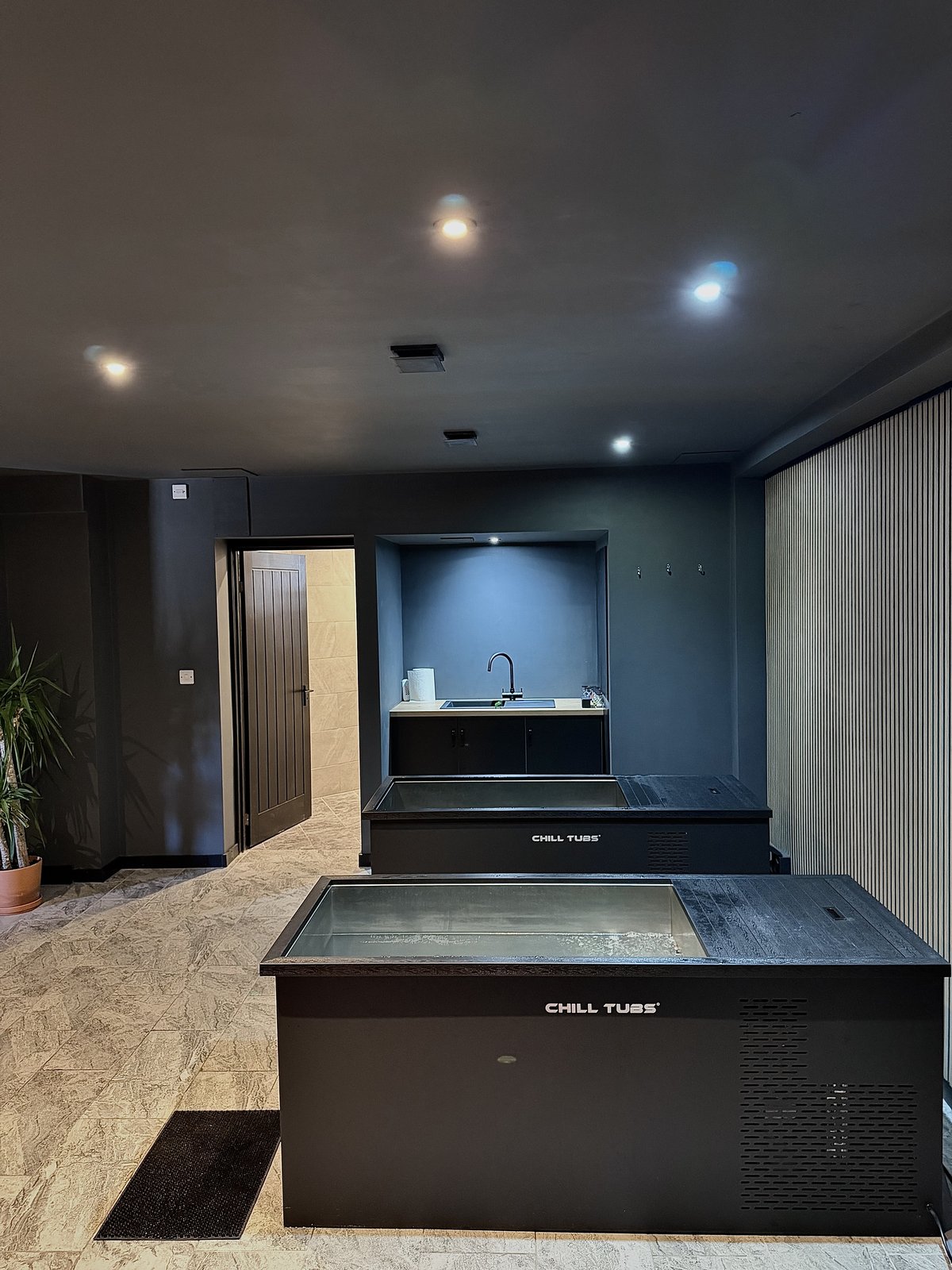
WHOLE-BODY COLD WATER
Immersion at 4–7°C, the modality with the stronger evidence base of the two. Water reaches the whole limb; cryo chamber air does not.
SIDE BY SIDE
Ice bath vs cryotherapy, compared
COLD WATER IMMERSION
Ice bath
- Medium
- Cold water, full-body immersion
- Temperature
- 4–15°C (RE:UP runs 4–7°C)
- Typical duration
- 2–5 minutes
- Cold load
- High. Cools fast and deep
- Evidence for soreness
- Strong, well established
- Pairs with sauna
- Yes, for contrast therapy
COLD AIR CHAMBER
Whole-body cryotherapy
- Medium
- Cold dry air, no immersion
- Temperature
- −110 to −140°C
- Typical duration
- 2–3 minutes
- Cold load
- Lower. Mostly the skin
- Evidence for soreness
- Emerging, less consistent
- Pairs with sauna
- Not typically
RE:UP Altrincham runs whole-body cold water immersion at 4–7°C, not a cryo chamber.
Book a session — £20THE PHYSICS
Why the colder-looking chamber isn't the bigger cold hit
The thing people get wrong about ice baths versus cryotherapy is assuming minus 130°C must beat 5°C. As a number, of course it does. But your body doesn't cool down by temperature alone. It cools by how fast heat is pulled away from it, and water does that about 25 times faster than air at the same temperature.
So a few minutes in 5°C water actually draws more heat out of you, and reaches deeper into the muscle, than a few minutes of very cold air. A cryo chamber gives a sharp surface chill and a real jolt to the nervous system, but the deeper, longer cold load that the recovery research is built on comes from getting fully submerged.
HOW TO CHOOSE
Which one should you use?
Choose an ice bath if…
- Your main goal is post-training muscle recovery and reduced soreness
- You want the deeper, more evidence-backed cold load
- You want to pair cold with a sauna for contrast therapy
- You like being able to control your depth and exit any time
Cryotherapy may suit you if…
- You want a fast, dry cold hit with no changing into swimwear
- You dislike full water immersion
- You are using it mainly for the nervous-system "buzz" and alertness
- Convenience matters more than maximum cold load
If whole-body cold water is the option you want, that is what we run — 4–7°C, no chamber.
Book a session — £20SAFETY
Both share similar contraindications
Cold water immersion and whole-body cryotherapy are both unsuitable for people with cardiovascular disease, uncontrolled high blood pressure, Raynaud's disease, epilepsy or who are pregnant. If you have a relevant medical condition, consult your GP before using either. RE:UP staff screen all first-time visitors for contraindications before their session. Cold therapy is for recovery, not a medical treatment.
COLD WATER, NOT A CRYO CHAMBER
Two ice baths at 4-7°C in Altrincham
If this guide has convinced you that whole-body cold water immersion is the better-evidenced option, this is where to do it — no membership required for a first visit.
One session is £20. If you are coming more than once a month, a membership costs less per visit:
Essential
£50 /month
Four recovery sessions a month
£12.50 a visit
Unlimited
£65 /month
Unlimited sessions, up to two a day
About £7.50 a visit at twice a week
Unlimited Plus
£100 /month
Unlimited sessions plus a sports massage each month
Includes a £30 massage every month
20 Huxley Street, Broadheath, Altrincham, WA14 5EL · Open 7 days, 7am–9pm
Related guides
- Ice Bath Benefits: What Cold Water Immersion Does to the Body
- Contrast Therapy Guide: Ice Bath + Sauna Protocol
RE:UP Altrincham provides cold plunge ice baths at 4–7°C — a very different experience from a cryotherapy chamber. Book a session from £20 →
QUESTIONS
Ice bath vs cryotherapy, answered
An ice bath means sitting in cold water, usually 4 to 15°C, up to the shoulders for two to five minutes. Whole-body cryotherapy is different. You stand in a chamber of very cold dry air, around minus 110 to minus 140°C, for two to three minutes. The ice bath cools you through the water touching your whole body. Cryotherapy chills the skin quickly with cold air and never gets you wet. They are two different things, not two versions of the same one.
There is more research behind ice baths than cryotherapy when it comes to easing sore muscles after training. Ice baths keep you cold for longer and reach deeper into the muscle, while cryotherapy is shorter and works mainly on the skin. So for recovery and soreness, ice baths have the more reliable evidence. Cryotherapy is quick and dry, which some people prefer.
The air in a cryo chamber is much colder as a number, around minus 110 to minus 140°C against 4 to 7°C water. But water draws heat out of you about 25 times faster than air. So an ice bath at 5°C actually pulls more heat from the body, and reaches deeper, than a couple of minutes in minus 130°C air. The chamber sounds more extreme, but a full ice bath gives you the bigger cold hit.
Yes. Some people use cryotherapy for a quick, dry cold hit and ice baths for a longer, deeper soak and contrast therapy with a sauna. You do not have to pick one. If your main aim is recovery after training and you like the idea of going from cold to hot in the same visit, a full ice bath and sauna gives you more to work with than a cryo chamber on its own.
RE:UP Altrincham at 20 Huxley Street, Broadheath has two full-submersion cold plunge ice baths maintained at 4–7°C, paired with 8-person Finnish sauna for contrast therapy. Cold plunge access is included in a 90-minute recovery session from £20, open seven days a week, 7am to 9pm. No membership is required to book as a guest.
Both are safe for most healthy adults when used sensibly, and both come with the same warnings. Avoid either if you have a heart condition, uncontrolled high blood pressure, Raynaud's disease, or you are pregnant. Cryotherapy keeps you dry and avoids the shock of getting into cold water, which suits some people. With an ice bath you can control how deep you go and get out whenever you want. If you have a medical condition, check with your GP first.