
Recovery Guide · RE:UP Altrincham
Marathon Recovery: Race Day and Beyond
How to recover properly after 26.2 miles — the first 24 hours, the week-by-week plan, when to run again, and when soreness stops being normal.
Published ·Last reviewed
Autumn race season is nearly here. The Manchester Half Marathon lands on 4 October and the MBNA Chester Marathon follows on 11 October, which means thousands of runners around Altrincham are deep in peak training right now — most with a detailed plan for every week up to race day, and no plan at all for what comes after.
That's backwards. 26.2 miles causes more muscle damage in a few hours than most training blocks cause in a month, and how you handle the following two to four weeks decides whether you bank the fitness or limp into winter with a niggle.
Sauna, ice bath and Normatec compression under one roof in Altrincham.
Book a session — £20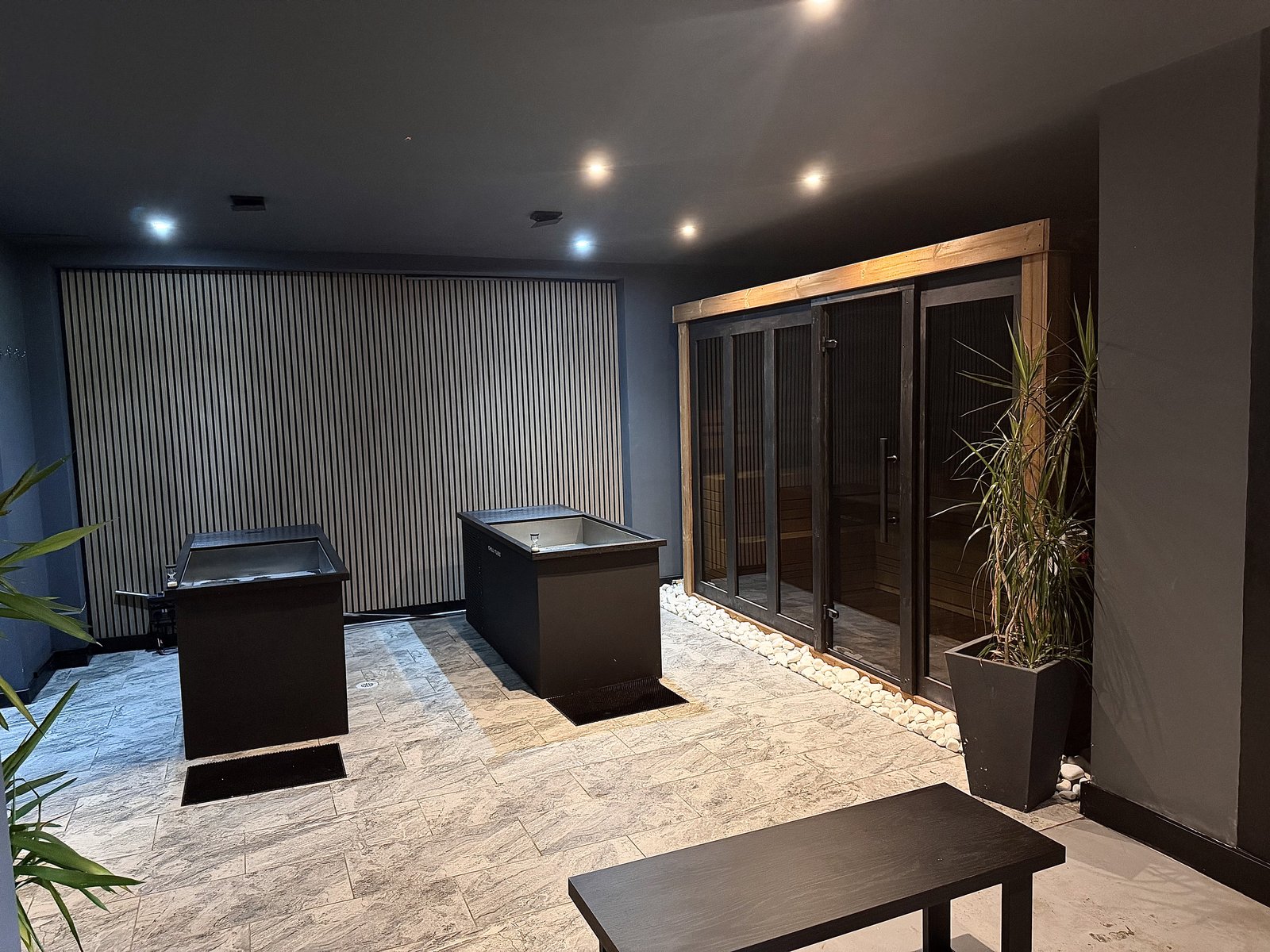
THE RECOVERY ROOM
Heat, cold and compression in one room — the three things this plan keeps returning to, without three separate appointments.
THE PLAN
Recovery, week by week
First 24 hours
Walk for ten to fifteen minutes rather than sitting straight down. Change into warm, dry clothes. Eat carbohydrate and protein within 30 to 60 minutes, even without much appetite. Rehydrate steadily through the day rather than all at once.
Week one
No running. Daily walking, gentle mobility, eight to nine hours of sleep, and consistent eating. Days four to six are the ideal window for a sports massage — early enough to help, late enough that the acute soreness has settled so the tissue can actually be worked.
Week two
Two or three short, genuinely easy runs. Twenty to thirty minutes, conversational pace, walk breaks welcome. Still no intervals or tempo work.
Week three
Build easy volume back towards half your normal weekly mileage. Still no hard sessions. If a niggle from the race hasn’t settled by now, it is worth getting assessed rather than trained through.
Week four
If everything feels normal, reintroduce one faster session and build from there. The runners who lose their autumn fitness are rarely the ones who rested too long — they’re the ones who smashed a track session in week two.
Heat, cold and Normatec compression in one 90-minute session, £20.
Book a session — £20Related guides
RE:UP Altrincham offers guided cold plunge ice baths at 4–7°C and Level 5 qualified sports massage. Book a recovery session from £20 →
QUESTIONS
Marathon recovery questions — answered
Keep moving, get warm, and get carbohydrate and protein in within the first hour. Walk for ten to fifteen minutes after crossing the line rather than sitting straight down — gentle movement helps clear the by-products of the race far better than collapsing on the grass. Change into warm, dry clothes quickly, since temperature regulation is impaired after prolonged effort, and eat something with both carbohydrate and protein within 30 to 60 minutes even if your appetite has vanished.
Delayed onset muscle soreness typically peaks 24 to 48 hours after the race and settles over three to five days. Quads take the biggest eccentric battering of any muscle group over 26.2 miles, especially on a course with downhill sections, so stairs are usually the worst of it on days one and two.
Yes. Post-marathon is exactly the scenario cold water immersion is well supported for. The caveat sometimes raised about ice baths blunting muscle adaptation applies to strength training, not to this — after a marathon you are managing acute muscle damage and swelling, not chasing a training adaptation. A guided plunge at 4–7°C for two to four minutes in the first day or two reduces perceived soreness and helps you get back to comfortable movement sooner.
Most runners need three to four weeks before returning to normal training, with no running at all in the first week. Feeling fine by Thursday is not the same as the muscle fibres, tendons and immune system being fully repaired — the deeper damage outlasts the soreness by a wide margin.
No running for at least the first week, easy running only in weeks two and three, and no hard sessions or racing for at least three weeks. If your race took over four hours, err longer. Week two should be two or three short, genuinely easy runs; week three builds back towards half your normal mileage; week four is when a faster session can return, if everything still feels normal.
Halve everything, roughly. After a hard half marathon, expect two to three days of soreness, three to five days off running, and one to two weeks of easy running before full training resumes. The same principles apply: move lightly rather than resting completely, use cold water immersion in the first couple of days, and book a massage once the acute tenderness has settled.
Normal post-marathon soreness is symmetrical, dull, worst on days one and two, and steadily improving. Pain that is sharp, one-sided, or still worsening two weeks after the race deserves a proper assessment — particularly pain in one specific spot on a bone, a calf or hamstring that grabbed during the race and hasn't loosened, knee pain that flares only on jogging, or swelling that persists past the first week.
MARATHON RECOVERY IN ALTRINCHAM
Recover properly between blocks
Sauna, cold plunge and Normatec compression in one 90-minute session — the three things this guide keeps coming back to, without three separate appointments.
One session is £20. If you are coming more than once a month, a membership costs less per visit:
Essential
£50 /month
Four recovery sessions a month
£12.50 a visit
Unlimited
£65 /month
Unlimited sessions, up to two a day
About £7.50 a visit at twice a week
Unlimited Plus
£100 /month
Unlimited sessions plus a sports massage each month
Includes a £30 massage every month
20 Huxley Street, Broadheath, Altrincham, WA14 5EL · Open 7 days, 7am–9pm