
Recovery Guide · RE:UP Altrincham
The Recovery Routine Every Runner Needs
Your fitness is not built on the long run. It is built in the hours and days after it. Most runners plan their sessions to the minute and leave recovery entirely to chance. This is how to fix that, with a weekly template you can copy into your training diary.
Published ·Last reviewed
Training is the stimulus. Recovery is where the adaptation actually happens. Sleep, food and easy days do most of the work. Everything else is the supporting cast.
A recovery routine is not a shopping list of gadgets. It is the discipline of protecting the boring fundamentals, then layering tools like massage and cold water immersion on top where they earn their place.
Open from 8am seven days a week in Altrincham, so it fits either side of a run.
Book a session — £20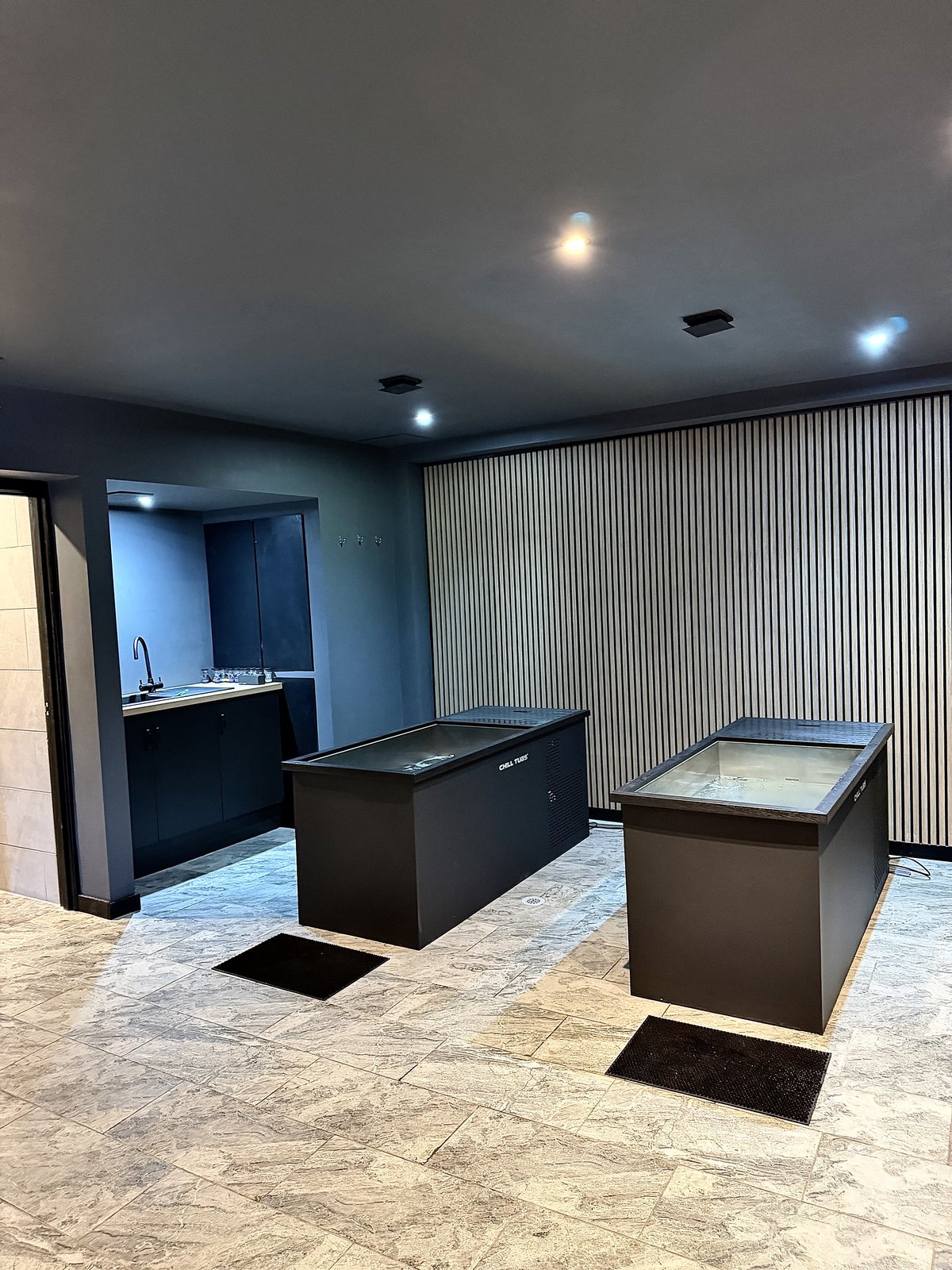
AFTER THE RUN
Open from 8am, seven days a week, so the whole routine fits either side of a session rather than around opening hours.
THE TEMPLATE
A week you can copy
This is the structure we use with the runners we treat. Adjust the running days to your own plan. The recovery scaffolding around them is the point.
Monday
Rest day, full. No running. Ten minutes of mobility: hips, calves, ankles.
Tuesday
Hard session, intervals or tempo. Protein-rich meal within the hour. Ice bath after the toughest sessions of the block, 2–4 minutes.
Wednesday
Easy run or cross-training. Conversational pace. Ten minutes of mobility.
Thursday
Moderate run. Nothing heroic. Early night.
Friday
Rest or short recovery run. This is the slot for your sports massage in heavy weeks.
Saturday
Parkrun, race-pace work or hills. Refuel properly. Do not skip lunch because it is the weekend.
Sunday
Long run. Eat within the hour, feet up, and treat the afternoon as part of the session.
The non-negotiables running through all seven days: 7 to 9 hours of sleep, protein at every meal, and ten minutes of daily mobility work. Short and consistent beats a 90-minute stretching session once a fortnight. The optional extras, meaning massage, cold water and compression, slot in around the hardest days. Be honest about the hierarchy. An ice bath will not rescue a week of five hours' sleep a night.
RED FLAGS
When tightness has become an injury
This is the question that keeps runners out of trouble. Book an assessment rather than pushing on when you notice any of these.
Pain that changes how you run
If you are altering your gait to avoid it, you are loading other structures wrongly and manufacturing a second injury.
Sharp or one-sided pain
Especially in a tendon, the shin or the foot. Dull and both-sided is usually fatigue. Sharp and one-sided usually is not.
Pain lasting two weeks or more
Despite easing off. Niggles that were going to resolve on their own have normally done so by then.
Catching these early is the cheapest injury prevention there is. An injury assessment and rehab session is a proper look at what is driving the pain and a plan to fix it, usually without stopping running entirely.
The whole routine in one visit, from 8am. 90 minutes, £20.
Book a session — £20QUESTIONS
Runner recovery questions, answered
Sleep, food and easy days do about 90% of the work. Everything else is the supporting cast. Aim for 7 to 9 hours of sleep a night, more during heavy weeks, because that is when muscle repair happens. Eat something with protein and carbohydrate within an hour or so of finishing a hard run. And keep your easy days genuinely easy. That last one is where most runners go wrong. If every run drifts into the grey zone, too hard to recover from and too easy to drive adaptation, you accumulate fatigue without buying much fitness.
Most runners need one to two full rest days a week. Newer runners, older runners and anyone coming back from injury sit at the higher end. Experienced runners with years of consistent mileage can often manage on one. Muscles typically need 24 to 48 hours to recover from a genuinely hard session, which is why sensible plans alternate hard and easy days rather than stacking intensity back to back.
A recovery run is short, slow and conversational. It promotes blood flow without adding meaningful training stress. A rest day means no running at all. In a heavy block you need at least one true rest day a week, and a recovery run does not count, however slow it felt.
For most runners, no, and the ones who get away with it have usually spent years building up to it. Running is high impact and repetitive, and tendons and bones adapt more slowly than your cardiovascular system does. That gap is exactly where overuse injuries live. Your lungs say yes long before your Achilles does. If you love daily movement, keep the streak but swap one or two days for cycling, swimming or a brisk walk. You keep the habit and the blood flow without the impact.
Every two to four weeks during a normal training block, moving towards fortnightly or even weekly in the biggest weeks of marathon or half-marathon preparation. Regular massage helps manage the tension that builds up in calves, hamstrings and glutes, and a good therapist will spot a tight spot developing several weeks before it becomes something you feel on a run. Timing matters around races. Book a lighter session two to three days before an event, never the day before, and wait 24 to 72 hours after a marathon before deep tissue work.
Yes, used selectively. Cold water immersion reliably reduces perceived muscle soreness in the 24 to 72 hours after hard running, which is exactly when a heavy block starts to grind. The sensible approach is to save it for your hardest sessions, so the long run, the big interval day or a race, rather than plunging after every jog. Some of the inflammation you are switching off is part of the adaptation signal, so daily use after easy runs spends the tool where it earns you least. Two to four minutes at 4–7°C is plenty.
For a hard session, 24 to 48 hours before the same kind of work again. For a marathon, three to four weeks before normal training resumes. Soreness and recovery are not the same timeline. Feeling fine by Thursday does not mean the muscle fibres, tendons and immune system have finished repairing, and the deeper damage outlasts the soreness by a wide margin.
Normal training tightness is dull, roughly symmetrical, eases as you warm up and improves with a rest day. Get it assessed rather than pushing on if pain changes how you run, because altering your gait loads other structures wrongly and manufactures a second injury. Also get it looked at if pain is sharp or one-sided, especially in a tendon, the shin or the foot, or if it persists for two weeks or more despite easing off. Niggles that were going to resolve on their own have usually done so by then.
BUILT FOR RUNNERS
The whole routine, one visit
Heat, cold and compression in a single 90-minute slot, seven days a week from 8am — early enough to fit either side of a run.
One session is £20. If you are coming more than once a month, a membership costs less per visit:
Essential
£50 /month
Four recovery sessions a month
£12.50 a visit
Unlimited
£65 /month
Unlimited sessions, up to two a day
About £7.50 a visit at twice a week
Unlimited Plus
£100 /month
Unlimited sessions plus a sports massage each month
Includes a £30 massage every month
20 Huxley Street, Broadheath, Altrincham, WA14 5EL · Open 7 days, 8am–9pm